## A Final Gathering That Redefined Brotherhood and Legacy
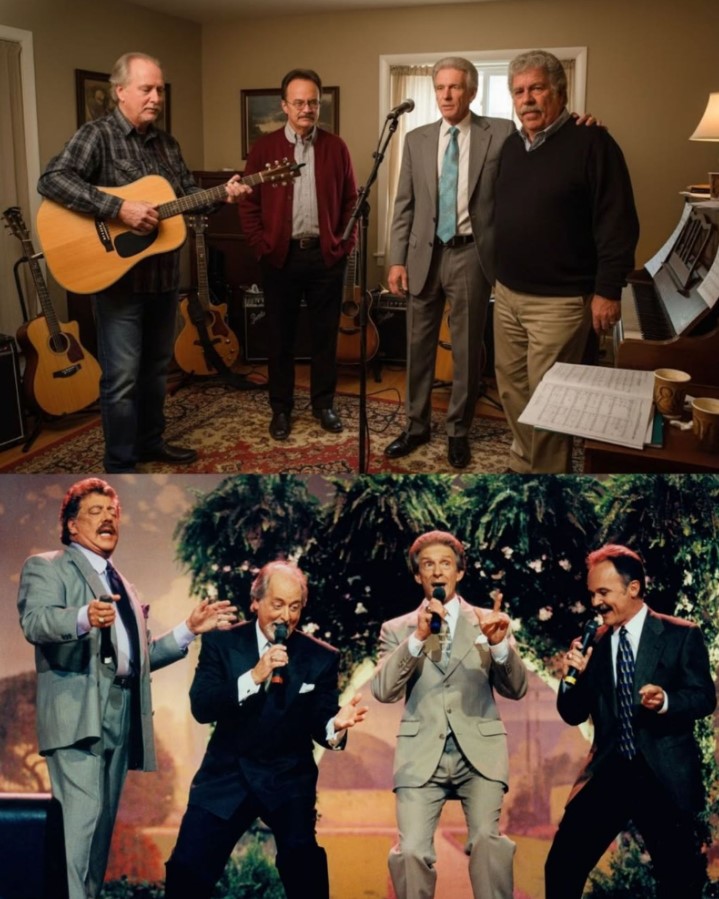
In the quiet heart of Staunton, Virginia, far from the roar of arenas and the glow of television lights, The Statler Brothers shared a moment that would become one of the most meaningful chapters in their legendary career. Their final rehearsal was not staged for cameras or crowds. It unfolded in a modest room, where four chairs, four voices, and decades of shared life created an atmosphere filled with reverence, memory, and gratitude. Jimmy Fortune, reflecting on this moment, revealed truths that fans never witnessed—truths that encapsulated the soul of a group whose bond always extended beyond music.
## A Room Wrapped in Weight, Warmth, and History
As Fortune recalled, the studio felt “heavy but warm,” a space where silence held as much meaning as song. This was no typical run-through. Every glance, every breath, every softly spoken word carried the weight of forty years of collaboration, hardship, humor, and unbreakable trust. The men weren’t preparing for another show—they were acknowledging the closing of a life chapter that had shaped them into brothers.
What struck Fortune most was the stillness. No managers. No backstage rush. No audience waiting. Only the hum of the room and the suffocating awareness that this would be their final time singing together in private. Fans saw the polished farewell on stage, but the most powerful goodbye happened long before the spotlight hit.
## Harold Reid’s Unforgettable Words That Defined Their Parting
At the center of this profound moment was Harold Reid, whose deep voice and unforgettable presence anchored the group for decades. During a pause in their singing, he leaned forward, voice quiet but unwavering, and spoke the line that would echo long after the rehearsal ended: “Whatever happens tomorrow… this brotherhood is bigger than any stage.”
It was not a goodbye. It was a statement of gratitude—an acknowledgment that their connection had always been grounded in something far deeper than fame or applause. Fortune described Reid’s words as the emotional core of the evening, a sentiment that crystallized everything The Statler Brothers represented: humility, loyalty, and the power of shared purpose.
## Singing Slower, Holding Longer, Cherishing Every Last Note
As the rehearsal resumed, something changed. Their harmonies stretched just a little longer, their phrasing softened, and the melodies felt more like prayers than performances. Fortune noted that each member seemed to sing as if trying to “hold the moment in place.” What fans heard on stage during their final concert was polished and professional—but what unfolded in that room was raw, intimate, and deeply human.
Songs they had performed thousands of times suddenly felt fragile, sacred. The pauses between notes grew longer. No one spoke unless necessary. Their music, always a seamless blend of craftsmanship and heart, became a vessel for everything they struggled to say out loud.
## A Farewell That Fans Continue to Feel Decades Later
Although the public never saw this rehearsal, its emotional resonance continues to shape how fans remember The Statler Brothers. Their legacy has always been defined by authenticity, and this last gathering perfectly embodied the sincerity behind their music. According to Fortune, it wasn’t a rehearsal at all—it was “a quiet thank you between brothers,” a moment when gratitude replaced performance, and silence said more than any final bow.
The world witnessed an iconic farewell concert. But the true goodbye—the tear-filled, whispered, unguarded goodbye—happened long before the curtain rose. And it remains one of the most powerful untold stories in country music history.