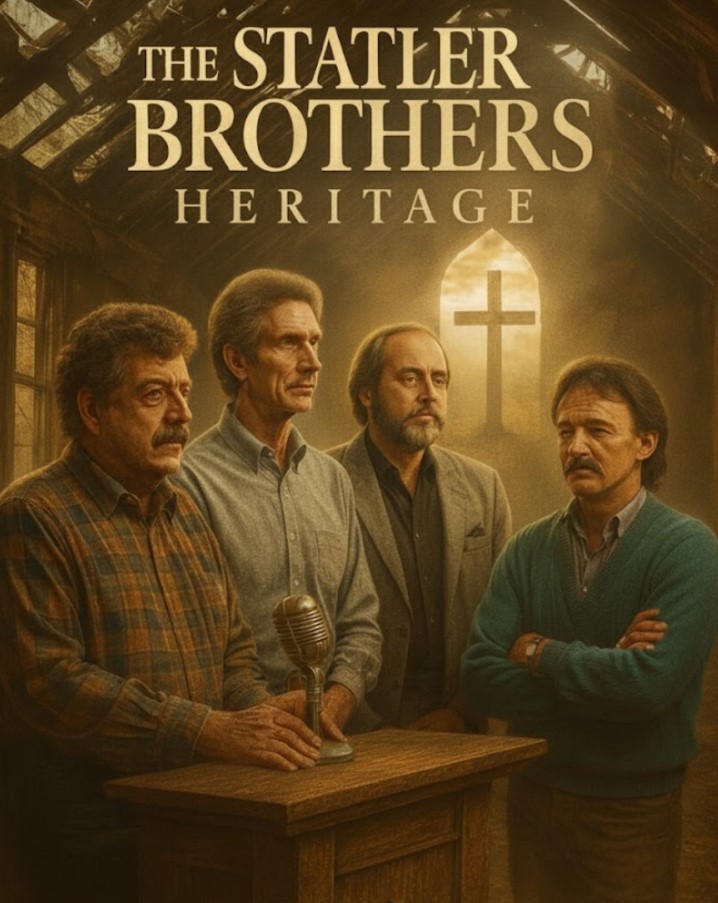
A Storm That Changed Staunton Forever
In the spring of 1978, the quiet town of Staunton, Virginia experienced a storm of unprecedented ferocity. Winds tore through streets, uprooting trees and leaving a trail of devastation in their wake. Among the many structures affected was a small white church perched atop a hill — a humble building that had once witnessed the earliest harmonies of the Statler Brothers as boys. By morning, the roof of the church had been ripped away, exposing the wooden interior to the merciless sky. What could have been a symbol of loss and despair soon became the stage for an unforgettable moment in American gospel and country music history.
The Statler Brothers Return to Their Roots
The following day, Don, Harold, Phil, and Jimmy returned to the ruin of their childhood practice space. They came not with cameras or recording equipment, nor with an audience clamoring for entertainment. Instead, they arrived quietly, each carrying memories and a deep connection to the place where their musical journey had begun. Don carefully placed a rusted, weathered microphone back on the soaked pulpit, the metal trembling in the lingering wind. Harold, surveying the broken windows and shattered rafters, spoke softly, “We started here… maybe it’s time we sing here again.”
An Unamplified Performance That Stirred Souls
With no expectation of applause or fanfare, the group began to sing “Amazing Grace”, their voices carrying effortlessly into the open sky. The sound was fragile, yet it held a weight and clarity that resonated with every echo of the ruined church. The wind passed through the broken windows like a gentle accompaniment, weaving itself into the music. The townspeople, drawn by the haunting beauty of the melody, slowly began to gather. A grandmother in her shawl paused at the edge of the hill. Children held hands and tiptoed closer. Soon, shopkeepers, farmers, and families lined the periphery, each absorbed by the sacred simplicity of the moment.
A Town United by Music and Faith
As the Statler Brothers continued, the atmosphere shifted. The ruined church, stripped of its roof, became a sanctuary of collective memory and shared emotion. Rain still dripped from the rafters, turning the wooden floor into a shimmering reflection of the light breaking through the clouds. The music lifted the town, uniting strangers and neighbors alike under a single, invisible roof of harmony and hope. Every note seemed to stitch together the community, reaffirming the power of music to transcend destruction and loss.
The Lasting Message of a Roofless Church
When the final note faded, sunlight poured across the hill, illuminating the lone wooden cross that had survived the storm. Harold’s whispered words encapsulated the profound truth of the moment: “God didn’t take the music away — He just changed the place where we’d find it.” No photographs were taken, no recordings captured the evening. Yet the memory of that spiritual performance lingered in the hearts of all who witnessed it, a testament to resilience, faith, and the enduring strength of harmony.
Why This Moment Matters in Music History
This singular night stands as a beacon in American music history, showcasing the intimate connection between artists and their origins. The Statler Brothers’ decision to return to the ruined church exemplifies a commitment to authenticity and emotional depth, creating a moment that transcended commercial success or public recognition. For Staunton, the storm became a catalyst for unity, and the roofless church transformed into a symbol of hope, proving that music can flourish even amid adversity.
The legacy of that night continues to inspire musicians and listeners alike. It is a reminder that the true power of music is not measured by applause or recordings, but by its ability to touch souls, bind communities, and create moments of profound, lasting beauty.