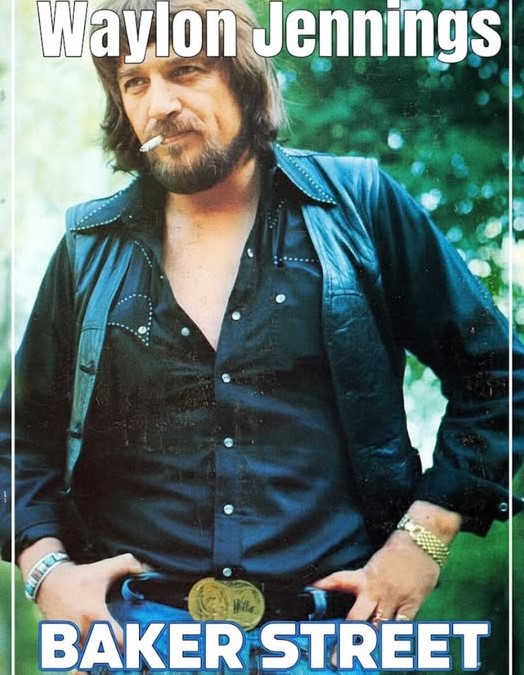
Waylon Jennings’ Visionary Reinterpretation of a Classic
Waylon Jennings’ cover of “Baker Street” stands as a masterful example of how a song from one genre can be transformed into something uniquely compelling when filtered through the lens of another. Originally penned and performed by Gerry Rafferty in 1978, “Baker Street” achieved international acclaim for its melancholic lyrics and the instantly recognizable saxophone riff that has become a staple of 1970s soft rock. Jennings, a cornerstone of the Outlaw Country movement, took this cross-genre anthem and infused it with his signature style, creating a version that resonates with both country aficionados and fans of classic rock.
Musical Transformation: From Saxophone to Guitar-Driven Country
One of the most striking elements of Jennings’ rendition is the replacement of Rafferty’s iconic saxophone riff with a soulful, expressive guitar solo. The guitar brings a warm, organic texture to the track, highlighting Jennings’ roots in country and honky-tonk traditions. The rhythm section is deliberately restrained, providing a steady, grounded foundation that contrasts with the polished, pop-infused production of the original. This careful arrangement allows Jennings’ seasoned vocals to shine, emphasizing the emotional weight of the lyrics and the reflective tone that made the original so memorable.
Vocal Interpretation and Emotional Depth
Jennings’ delivery of “Baker Street” is imbued with raw authenticity. His weathered voice carries the experiences of a life on the road, adding layers of depth to the story of urban alienation and personal longing present in Rafferty’s lyrics. Every note is infused with subtle nuances that convey both melancholy and resilience, capturing the listener’s attention from the first line to the final chord. By doing so, Jennings transforms the song from a straightforward soft rock narrative into a profound country ballad that speaks to universal human emotions.
Production Choices that Enhance Authenticity
The production on Jennings’ version is intentionally lean and unembellished, reflecting the aesthetics of 1980s country music while maintaining fidelity to the original’s introspective mood. The instrumentation is carefully balanced, with acoustic and electric guitars providing melodic richness, a steady bass anchoring the rhythm, and subtle percussion enhancing the song’s dynamic flow. This stripped-back approach allows the lyrics to take center stage, ensuring that the listener is fully engaged with the narrative without distraction from excessive studio effects.
Bridging Musical Eras and Genres
Jennings’ cover of “Baker Street” exemplifies the power of genre fusion, bridging the gap between 1970s soft rock and classic country. His interpretation honors the reflective, contemplative essence of Rafferty’s composition while simultaneously imbuing it with the grit and authenticity of Outlaw Country. This seamless blending of styles not only broadens the song’s appeal but also demonstrates Jennings’ skill as an artist capable of transcending musical boundaries. Listeners are offered a fresh perspective on a beloved classic, experiencing it in a form that is both familiar and entirely new.
Enduring Legacy and Cultural Impact
Waylon Jennings’ country-infused take on “Baker Street” remains a testament to the timeless quality of well-crafted music and the enduring appeal of cross-genre experimentation. By reinterpreting a 1970s soft rock hit through the lens of country, Jennings has created a rendition that continues to captivate listeners decades later. The cover is celebrated for its artistry, emotional resonance, and ability to showcase Jennings’ unique voice in a way that honors the original while asserting his own musical identity.
This rendition of “Baker Street” is more than just a cover; it is a bridge between musical worlds, a testament to Jennings’ vision, and a lasting contribution to both country and popular music history.