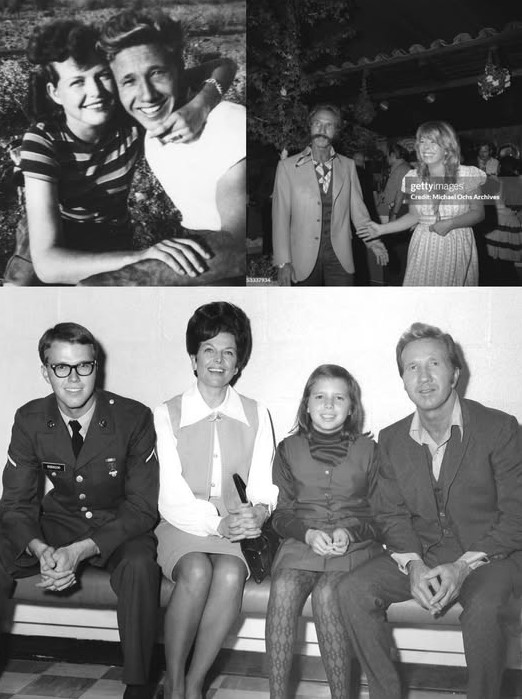
A Timeless Testament to Love and Devotion
Few songs in the history of country music capture the essence of enduring love quite like Marty Robbins’ “My Woman, My Woman, My Wife.” Released in 1970, this heartfelt ballad became a powerful reflection of unwavering devotion, gratitude, and quiet strength. The song not only reached No. 1 on the Billboard Hot Country Singles chart but also crossed into the mainstream, peaking at No. 42 on the Billboard Hot 100, proving its universal appeal. More than five decades later, it remains one of the most emotionally resonant tributes to lifelong partnership in country music history.
A Song Born from Deep Personal Emotion
When Marty Robbins penned “My Woman, My Woman, My Wife,” he wasn’t just crafting another hit. He was writing from the depths of his heart—a deeply personal ode to his beloved wife, Marizona Baldwin Robbins. The song paints an intimate portrait of a woman whose steadfast love and sacrifices define the foundation of their life together. Robbins’ tender delivery transforms the lyrics into a living portrait of devotion: a wife who endures the burdens of daily life, whose gentle hands and quiet patience keep the family grounded, and whose faith gives her the strength to carry on.
Each line of the song feels like a whispered thank-you—an acknowledgment of the unseen efforts that make love last. Robbins’ ability to balance sentimentality with sincerity gives the track its timeless pull. His words do not merely describe love; they honor it.
Bridging Tradition and Modern Sensibility
At the turn of the 1970s, country music was evolving rapidly, embracing new production styles and themes. Yet, Robbins chose simplicity—a classic arrangement built on acoustic warmth, gentle strings, and a voice brimming with authenticity. In an era of experimentation, “My Woman, My Woman, My Wife” stood as a quiet affirmation of traditional values, reminding listeners that love, loyalty, and humility never go out of style.
This delicate balance between old-fashioned sentiment and universal truth is what allows the song to transcend generations. Whether heard by fans who grew up in the golden age of country or by younger audiences discovering Robbins for the first time, the message remains unshakably relevant: true love is not loud—it endures in silence, through sacrifice and grace.
Chart Success and Lasting Legacy
The song’s success was immediate and profound. It earned Robbins widespread acclaim, reinforcing his reputation as one of country music’s most versatile voices. Featured on the album of the same name, “My Woman, My Woman, My Wife” showcased his rare gift for storytelling—transforming ordinary moments into poetic revelations. The track’s crossover appeal revealed something even more enduring: Robbins’ ability to connect deeply with anyone who has ever loved, lost, or longed for understanding.
Over time, the song became a standard of country sincerity, often played at weddings, anniversaries, and family gatherings. Its message of appreciation for the quiet heroism of women continues to move audiences worldwide.
A Legacy of Love That Still Inspires
Today, “My Woman, My Woman, My Wife” stands not only as one of Marty Robbins’ greatest achievements but as a cornerstone of heartfelt songwriting. Its melody lingers, its words resonate, and its spirit endures—reminding us that love, when rooted in respect and faith, becomes something far greater than emotion; it becomes legacy.
Through this timeless ballad, Marty Robbins gave the world more than a song. He gave us a mirror reflecting the best of love itself—selfless, tender, and eternal.