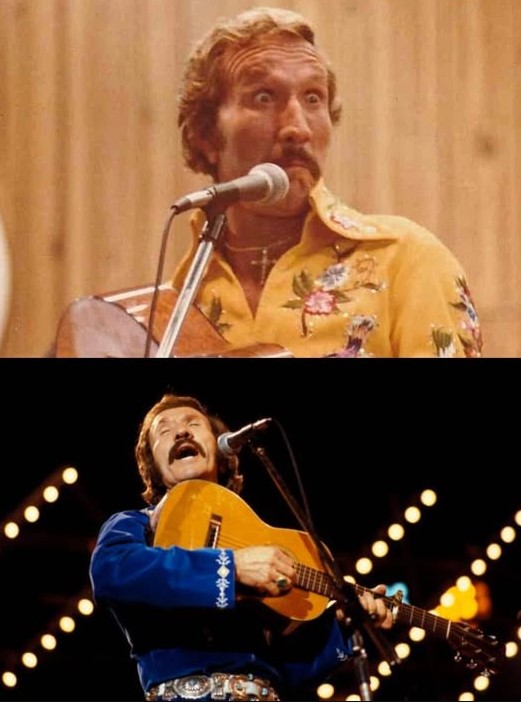
Few moments in music history carry the quiet power and emotional depth of Marty Robbins’ rendition of “Now Is the Hour.” With his signature warmth and timeless baritone, Robbins transformed this farewell ballad into an unforgettable expression of parting, love, and remembrance. Rooted in history yet timeless in its sentiment, this performance remains one of the most poignant interpretations ever recorded by the country legend.
A Farewell Echoing Across Generations
When Marty Robbins lent his voice to “Now Is the Hour,” he didn’t simply sing a song—he told a story that resonated deeply with listeners across eras. Originally a traditional Māori melody titled “Po Atarau,” the piece was first sung during World War I as soldiers bid goodbye to loved ones before leaving New Zealand’s shores. As the song evolved into its English form, it carried with it the same emotional gravity: the ache of separation and the fragile hope of reunion.
Robbins’ version captures that sentiment perfectly. His smooth, resonant voice becomes a vessel for collective memory—a reminder of countless goodbyes whispered at train stations, docks, and doorsteps. It’s not just music; it’s a reflection of humanity’s universal experience with farewell.
Marty Robbins’ Emotional Craftsmanship
Known for his masterful storytelling, Robbins had a rare ability to breathe life into lyrics with sincerity and depth. In “Now Is the Hour,” his phrasing is deliberate yet tender, carrying an emotional cadence that feels both intimate and expansive. Every word he sings seems suspended in time, allowing listeners to linger in the bittersweet beauty of each note.
Unlike many of his chart-topping hits, this song was never about commercial success. Instead, it stands as a testament to Robbins’ artistry and empathy—a gentle reminder that true musical impact isn’t measured in numbers but in the feelings it stirs within the heart.
The Historical Journey of “Now Is the Hour”
The song’s journey from New Zealand’s shores to Robbins’ repertoire is a story of cultural endurance. First composed in the early 20th century, “Po Atarau” evolved into “Now Is the Hour” when English lyrics were added in the 1940s. The adaptation retained the song’s message of longing and love, connecting soldiers and families separated by war and distance.
By the time Marty Robbins recorded his rendition, the song had already been performed by numerous artists worldwide—but his version stood apart. Robbins infused the melody with authentic emotional warmth, turning a historical farewell ballad into a deeply personal reflection. Through his performance, the song found a new life, bridging the past and present in one seamless embrace.
A Song That Transcends Time
Listening to Robbins’ “Now Is the Hour” is like stepping into a photograph from another era—sepia-toned, nostalgic, and achingly human. The music invites reflection, urging us to pause in a fast-paced world that rarely allows for stillness. It evokes images of tearful departures, handwritten letters, and long-awaited reunions.
This is why the song remains eternally relevant. It speaks to anyone who has ever loved and lost, who has said goodbye without knowing when—or if—they would meet again. Robbins’ voice becomes a bridge between generations, connecting us through shared emotion and timeless melody.
The Enduring Legacy of Marty Robbins
As we revisit this heartfelt performance, it becomes clear that Marty Robbins’ artistry transcends time. His interpretation of “Now Is the Hour” is not merely a cover—it’s a resurrection of feeling, a rekindling of the gentle sorrow that makes life’s moments precious. In an age defined by haste and impermanence, Robbins reminds us of the beauty in slowing down, in feeling deeply, and in remembering those we’ve had to let go.
When Marty Robbins sang “Now Is the Hour,” the world seemed to pause. For that fleeting moment, time truly stood still—and the echoes of his voice continue to remind us that love, once felt, never fades.